
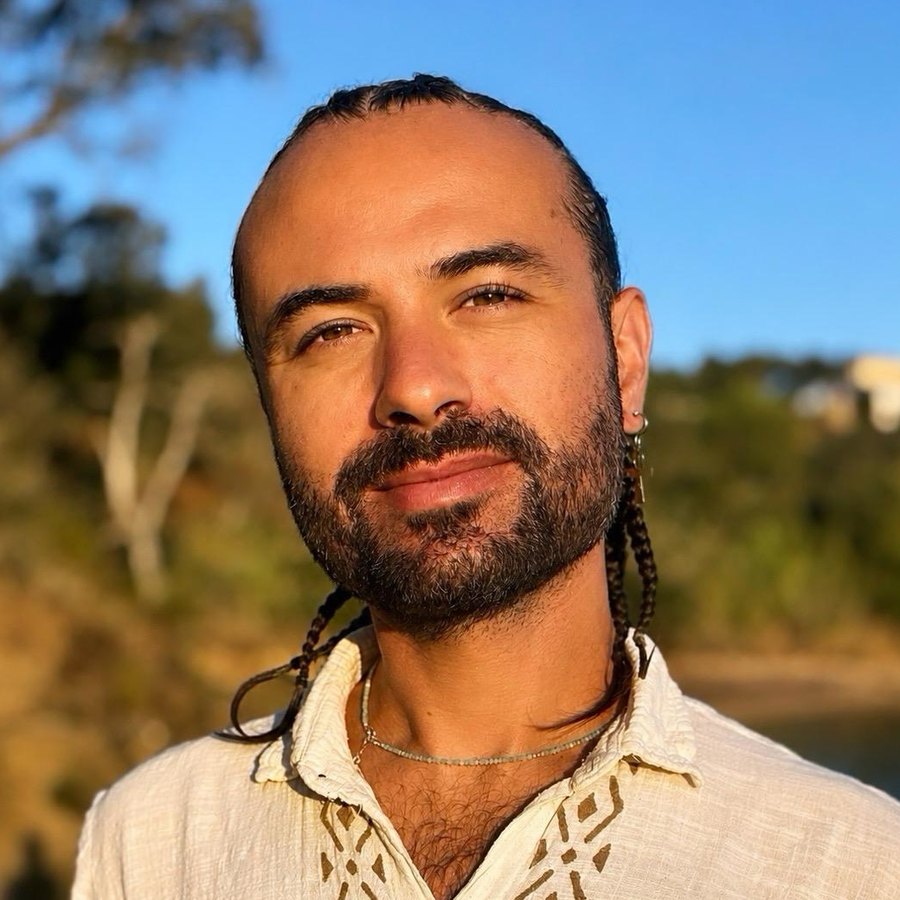
 Thomas Da Silva
In this article
A skin that never stops listeningBeing touched means being recognisedWhen touch becomes careThe paradox of our timesTouch calls for responsibilityGiving touch its place againLearning to speak with the handsA teaching that goes beyond techniqueEven before we could speak, we were touched.
Before the first words, before the first memories, even before opening our eyes to the world, we already knew the language of contact.
A hand resting on a round belly. A caress after birth. Welcoming arms. Skin against skin.
Touch is probably the first language we learn. And yet it is often the one we forget as we grow up.
We live in a society where words take up an immense place. We talk to explain, convince, reassure, charm or comfort. We write messages, make calls, exchange all day long.
But we touch each other less and less. As if contact had become something exceptional, sometimes even awkward.
Yet our body has never stopped needing it.
A skin that never stops listening
The skin is the largest organ of the human body. It protects us from the outside world, regulates our temperature and constantly informs us about our environment.
But it is also a remarkable organ of communication. Beneath its surface are millions of receptors able to perceive warmth, cold, pressure, vibrations or the softness of a caress.
Each contact is translated into information that travels to the brain. Our skin listens tirelessly. Even when we no longer pay attention to it.
Being touched means being recognised
Just watch a child. When they fall, they often look for an adult’s arms before anyone even speaks to them. The gesture comes before the words. Because it soothes. Because it reassures. Because it silently says: “I am here.”
Throughout our lives we keep seeking this sensation. A sincere handshake. A hug. A hand on a shoulder. A massage.
All these gestures say something that words sometimes struggle to express.
They remind us that we are not alone.
When touch becomes care
Massage draws on this deeply human capacity. But it gives it a framework. A time. An intention.
During a session, touch has nothing to prove. It does not seek to convince. It asks for nothing in return. It is simply present.
And perhaps that is what makes it so precious. In a daily life where everything moves fast, receiving an hour of attention entirely devoted to your body becomes a rare experience.
Massage offers a space where you can finally stop doing. And simply be.
The paradox of our times
We have never communicated so much. And yet many people say they feel alone.
We exchange hundreds of messages. We are permanently connected. But how many contacts are truly lived?
Touch has a quality that screens will never be able to reproduce. It is alive. It adapts. It responds. It creates an immediate relationship between two human beings.
That is probably why a massage often leaves a much deeper imprint than the words exchanged during an hour.
Touch calls for responsibility
Touching someone is a privilege. The body is an intimate territory. Being welcomed there requires trust. That trust is not won through a spectacular technique. It is built through the practitioner’s quality of presence. Through their listening. Their posture. Their respect. Their ability to remain available to whatever arises.
That is why I believe massage is never a mere sequence of movements. It is an encounter between two people. One chooses to let go. The other chooses to welcome.
Giving touch its place again
I dream of a world where touch naturally finds its place again. A respectful touch. Conscious. Free of all ambiguity.
A touch that does not seek to take, but to offer. That does not seek to repair at all costs, but to accompany.
That imposes nothing. That listens more than it acts. Perhaps we have forgotten this language.
But I am convinced it never truly disappears. It simply lies dormant in each of us.
Sometimes all it takes is an encounter, a massage or a single deeply sincere gesture for it to reappear.
Learning to speak with the hands
When people come to learn massage, they often ask me: “What is the best movement?” Over time, my answer has always become the same. The most beautiful movement is the one that is fully inhabited.
Because hands always end up revealing the person who guides them.
Hurried hands speak of agitation. Hesitant hands speak of a lack of confidence. Present hands speak of listening.
Learning massage is therefore not only learning where to place your hands.
It is learning how to inhabit them. To make them available. Sensitive. Alive.
It is rediscovering a language we already carried within us before we could even speak.
And perhaps that, in the end, is the most beautiful gift touch can offer: reminding us of a way of relating to others that goes neither through words nor explanations, but simply through a sincere presence.
A teaching that goes beyond technique
This is the vision that drives me when I teach energy massage. Of course, it is essential to learn the movements, understand the human body, acquire anatomical reference points and develop precise touch.
But beyond the movements, I like to invite each participant to rediscover this silent language we all carry within us.
Because massage is not only a practice. It is a way of meeting the other. And that encounter always begins with the quality of touch we choose to offer.
Treat yourself to a moment of pause
Tailor-made massages, energy treatments and sensory rituals at the Centre Ananda in Cannes, or at home on the French Riviera.